
The fault in a chain reaction crash in Minnesota depends on how the accident started and how each driver contributed to the collisions. While the driver who caused the initial impact is often primarily responsible, multiple drivers can share fault under Minnesota’s comparative negligence laws. Insurance companies analyze each driver’s actions, and liability can be divided among several parties. A Minneapolis car accident lawyer can investigate the crash, determine fault accurately, and help you recover compensation.
Proven Experience You Can Trust
Chain reaction crashes are among the most complex accident cases because they involve multiple drivers, conflicting accounts, and layered insurance coverage. Nelson Personal Injury, LLC has more than 40 years of experience representing injury victims across Minnesota and has recovered millions of dollars in compensation.
Attorney Matthew J. Nelson has extensive experience handling auto accident claims and has served as a certified no-fault arbitrator in more than 100 car crash cases. His insight into how liability is evaluated gives clients a strategic advantage when dealing with insurance companies.
Clients frequently note that the firm provides clear guidance and takes over the burden of dealing with insurers, which is critical in multi-vehicle accident claims.
What Is a Chain Reaction Crash?
A chain reaction crash, sometimes called a multi-vehicle accident, occurs when three or more vehicles are involved in a series of collisions. These accidents often happen on highways, during heavy traffic, or in poor weather conditions.
In Minneapolis, chain-reaction crashes are common during the winter months, when snow and ice reduce traction and visibility. Even a single mistake can trigger a sequence of impacts involving multiple drivers.
How Fault Is Determined in Minnesota
Minnesota follows a comparative fault system. This means fault can be shared among multiple drivers, and each party is responsible for their percentage of liability.
To recover compensation, you must be less than 50% at fault. If you are considered to have fault in causing the crash, your recovery is reduced by your percentage of fault.
Determining fault requires a detailed analysis of:
- The sequence of impacts
- Driver behavior before the crash
- Road and weather conditions
- Vehicle speed and braking distance
- Police reports and witness statements
Because multiple collisions occur in quick succession, determining exactly who caused what damage can be challenging.
The Role of the First Impact
In many chain reaction crashes, the driver who causes the initial collision plays a major role in determining liability. For example, a driver who is speeding or distracted and rear ends another vehicle may trigger a multi car pileup.
However, the first driver is not always fully responsible. Other drivers may contribute to the accident if they:
- Were following too closely
- Failed to brake in time
- Were distracted or impaired
- Lost control due to unsafe driving
This is why fault can be divided among multiple parties rather than assigned to a single person.
Common Chain Reaction Crash Scenarios
Different crash scenarios lead to different liability outcomes.
In a typical rear end chain reaction, one driver crashes into the vehicle in front, pushing it into another car. In this situation, the rear driver is often primarily at fault.
In more complex cases, such as highway pileups, multiple drivers may independently contribute to the accident by failing to maintain safe distances or speeds.
In icy conditions, drivers are still expected to adjust their behavior. Poor weather does not eliminate responsibility, but it can influence how fault is shared.
Example Fault Distribution in Multi Vehicle Crashes
| Scenario | Likely Fault Distribution |
| Rear driver causes initial impact | Majority fault on rear driver |
| Multiple drivers following too closely | Shared fault among drivers |
| Sudden stop with proper spacing | Fault may shift to initiating driver |
| Weather related loss of control | Partial fault depending on behavior |
Each case depends on specific facts and evidence.
Minnesota No Fault Insurance and Chain Reaction Accidents
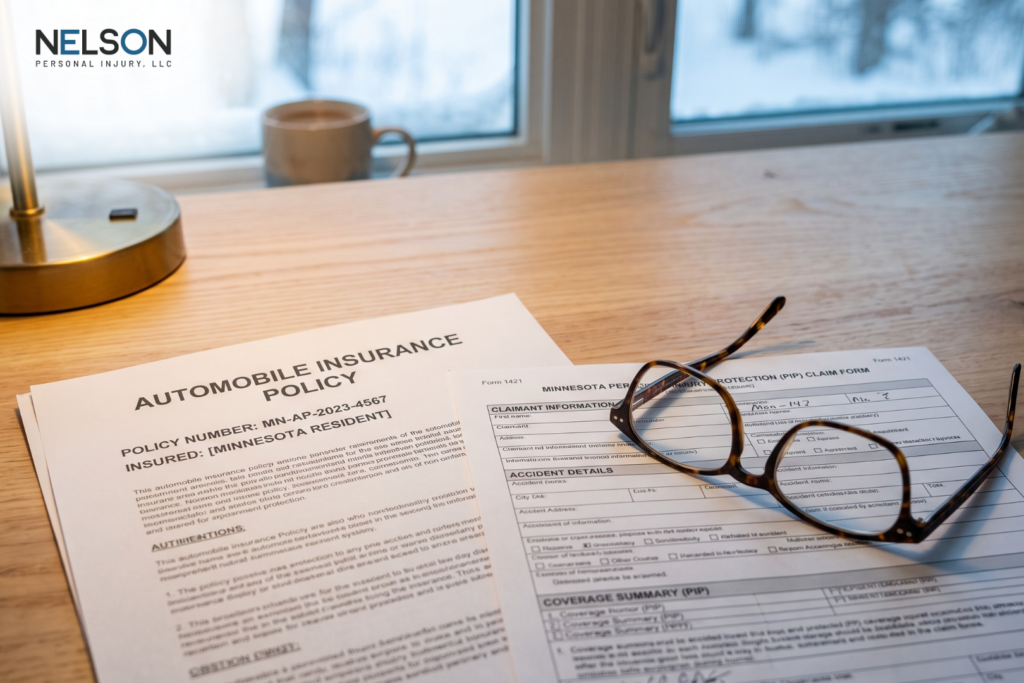
Minnesota’s no-fault insurance system means your own policy covers initial medical expenses regardless of fault. This includes Personal Injury Protection benefits for medical costs and lost wages.
However, serious injury cases can move outside the no fault system to bring a liability claim against any at fault party, or parties, and their insurance companies. When that happens, fault becomes critical in determining who pays for damages beyond basic no-fault coverage.
In multi vehicle crashes, this often involves multiple insurance claims and negotiations between insurers.
Why Liability Disputes Are Common
Chain reaction crashes almost always involve disputes over who is responsible. Drivers may give conflicting statements, and insurance companies often try to minimize their share of liability.
Common issues include:
- Disagreement over who caused the first impact
- Conflicting witness accounts
- Lack of clear video or physical evidence
- Attempts by insurers to shift blame
These disputes can delay claims and reduce settlement offers if not handled properly.
How a Minneapolis Car Accident Lawyer Can Help
A Minneapolis car accident lawyer plays a critical role in multi-vehicle accident cases. Without legal representation, it can be difficult to prove fault and secure fair compensation.
An experienced auto accident attorney in Minneapolis, MN can:
- Investigate the crash using expert analysis
- Obtain and review accident reports and evidence
- Work with reconstruction specialists
- Identify all liable parties
- Handle negotiations with multiple insurance companies
This level of representation ensures that your role in the accident is accurately assessed and that you are not unfairly blamed.
Steps to Take After a Chain Reaction Crash
What you do immediately after a multi-vehicle accident can impact your claim.
- Seek medical attention right away
- Call law enforcement and ensure a report is filed
- Document the scene with photos and videos
- Exchange information with all drivers involved
- Avoid admitting fault or speculating about causes
- Contact a car wreck lawyer in Minneapolis before speaking with insurers
These steps help preserve evidence and protect your position.
Real Results That Show Experience Matters
Nelson Personal Injury has handled complex accident cases involving disputed liability and serious injuries.
Notable recoveries include:
- $1.365 million in a car accident case involving severe injuries
- $425,000 in a crash involving negligence and liability disputes
- $350,000 in a head-on collision case
These results demonstrate the firm’s ability to navigate complicated cases and achieve meaningful outcomes.
Long-Term Impact of Chain Reaction Crashes
Multi-vehicle accidents often result in more severe injuries and higher damages due to multiple impacts. Victims may face extended medical treatment, lost income, and long-term rehabilitation.
Insurance claims can take longer to resolve because multiple parties are involved. This makes it even more important to have experienced legal guidance from the beginning.
Why Experience Is Critical in Multi-Vehicle Cases
Chain reaction crashes require a detailed understanding of both Minnesota law and insurance systems. These cases are not straightforward and often involve layered liability and multiple insurers.
Clients who work with experienced attorneys often report better outcomes and less stress during the claims process.
Having the right legal strategy can make a significant difference in how fault is assigned and how much compensation you recover.
Frequently Asked Questions
Who is usually at fault in a chain reaction crash?
Often, the driver who caused the initial collision is primarily at fault, but multiple drivers can share responsibility.
Can I still recover compensation if I was partially at fault?
Yes. Minnesota allows recovery as long as you are less than 50 percent at fault, though your compensation will be reduced by your corresponding percentage of fault.
How do insurance companies determine fault?
They review police reports, witness statements, physical evidence, and sometimes expert analysis.
What if multiple drivers are at fault?
Each driver may be assigned a percentage of fault, and compensation is divided accordingly.
Should I hire a lawyer for a multi-vehicle accident?
Yes. These cases are complex, and a Minneapolis accident attorney can help protect your rights and maximize your recovery.
Speak With a Minneapolis Car Accident Lawyer Today
If you were involved in a chain reaction crash, determining fault is only the first step. The real challenge is ensuring that liability is assigned fairly and that you receive full compensation for your injuries.
Nelson Personal Injury, LLC provides experienced, results-driven representation for accident victims throughout Minneapolis and Minnesota. Contact the firm today for a free consultation and get clear answers about your case and your next steps.