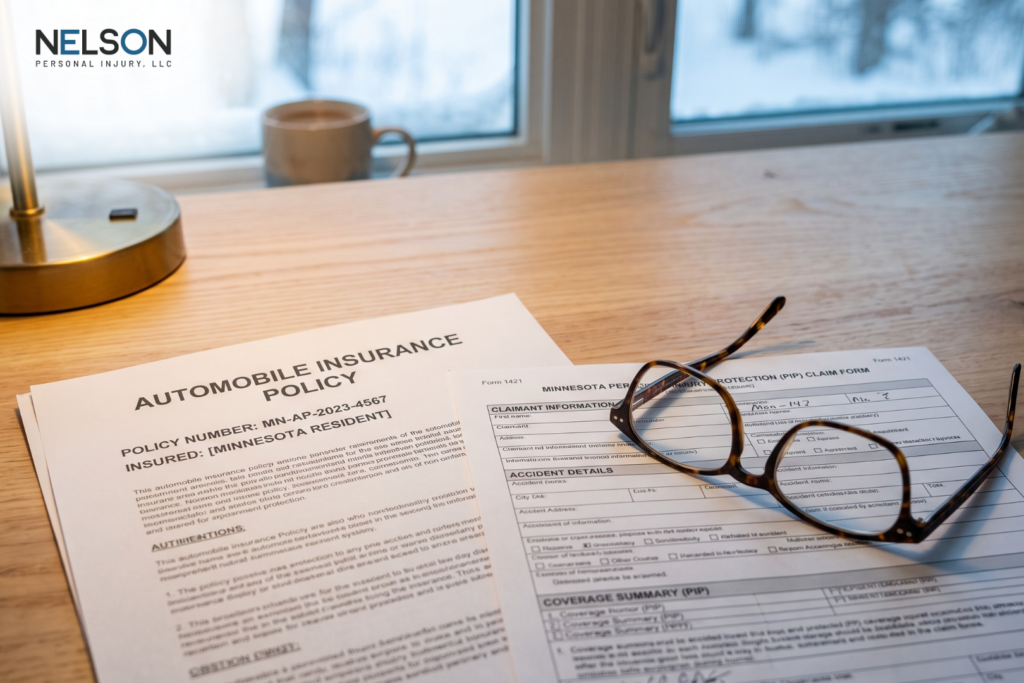
After a car accident in Minnesota, one of the first surprises many people face is learning that they must turn to their own insurance company for initial coverage, even if the other driver caused the crash. That is because Minnesota is a “no-fault” state, a system designed to get accident victims medical care and wage replacement quickly. But no-fault insurance is widely misunderstood, and failing to grasp how it works can cost you benefits you are entitled to. If you drive in St. Cloud or anywhere in Central Minnesota, here is what you need to know about no-fault coverage and your rights after a crash.
Key Takeaways
|
What No-Fault Insurance Actually Is
Minnesota’s no-fault system requires every driver to carry Personal Injury Protection, commonly called PIP, as part of their auto policy. When you are injured in a crash, you first file a claim with your own insurer to access these benefits, no matter who was at fault. The goal is speed: instead of waiting years for a lawsuit to resolve before getting help, you receive prompt coverage for medical care and lost income. Understanding this framework is the foundation of any car accident claim in Minnesota, because it determines where your first dollars of coverage come from.
Minnesota Crashes by the Numbers (2024)
|
What PIP Covers
Minnesota law sets a minimum level of no-fault benefits, and many drivers carry more. Standard PIP coverage typically includes two main categories. The first is medical expense benefits, which cover reasonable and necessary treatment such as hospital care, surgery, physical therapy, and chiropractic care. The second covers economic loss, including a portion of your lost wages if your injuries keep you from working, as well as replacement services for tasks you can no longer do yourself, like childcare or housekeeping. PIP can also provide certain benefits to survivors in the event of a fatal crash. Knowing exactly which benefits apply, and documenting them properly, is essential to getting the full value of your coverage.
What PIP Does Not Cover
Just as important is understanding the limits of no-fault. PIP does not pay for pain and suffering, emotional distress, or the full extent of your losses in a serious injury. It also does not cover vehicle damage, which is handled through separate property coverage. And PIP benefits are capped at your policy limits, which can be exhausted quickly after a major injury involving surgery or a long recovery. When your damages exceed what no-fault will pay, the critical question becomes whether you can pursue a claim directly against the driver who caused the crash.
| ❝ Proven Results
Nelson Personal Injury has secured major recoveries for injured Minnesotans, including $2.75 million in a truck accident case and $1,785,000 in a motorcycle accident case. As one client put it: “Matt Nelson is the best out there. I would highly recommend him to anyone.” |
Stepping Outside No-Fault: When You Can Sue
The trade-off of the no-fault system is that it limits your ability to sue for minor injuries. To bring a claim against the at-fault driver for pain and suffering and other non-economic damages, your case must meet a legal threshold. In Minnesota, that generally means your reasonable medical expenses exceed a set dollar amount, you are disabled for a certain number of days, or you suffer a permanent injury, permanent disfigurement, or death. Meeting this threshold opens the door to full compensation beyond what PIP provides. Because the outcome hinges on how your injuries are documented and characterized, this is an area where experienced legal guidance can make an enormous difference, particularly in a serious truck accident where injuries are often severe.
Why Motorcyclists Need to Pay Special Attention
One of the most important and least understood aspects of Minnesota’s no-fault law is how it treats motorcycles. Motorcycles are generally not covered by the same mandatory no-fault PIP benefits that apply to cars, which means an injured rider may not automatically have that first layer of medical and wage-loss coverage. This gap can leave riders dangerously exposed after a crash, making optional medical coverage and understanding your rights especially critical. If you ride, it is worth reviewing your coverage before you ever need it, and knowing that a motorcycle accident claim can play out very differently from a standard car accident claim.
How Fault Still Matters
Even in a no-fault state, fault has not disappeared, it simply enters the picture later. Once your case crosses the threshold to sue, proving who caused the crash becomes central to recovering full compensation. This is where issues like negligence, right-of-way, and shared responsibility come into play, and they can get complicated fast, especially in multi-vehicle collisions such as a chain reaction crash. Building the evidence to establish fault early, from the police report to witness statements and scene photos, strengthens your ability to hold the responsible party accountable.
Common No-Fault Mistakes That Cost You
Because the no-fault process runs on deadlines and paperwork, small missteps can quietly reduce or eliminate benefits you are owed. One of the most damaging is waiting too long to seek medical treatment, since a gap in care gives the insurer a reason to argue your injuries are not serious or not related to the crash. Another is failing to report the accident promptly or missing the window to apply for PIP benefits. Some people stop treatment as soon as they feel a little better, only for symptoms to return after benefits have lapsed. Others accept an insurer’s early decision to cut off benefits without realizing they have the right to challenge it. It is also a mistake to give a recorded statement or sign forms without understanding how they may be used against you. Keeping careful records of every appointment, bill, and missed workday, and getting advice before you accept any denial, protects both your health and the full value of your claim.
Frequently Asked Questions
Do I use my own insurance even if the other driver caused the crash?
Yes. Under Minnesota’s no-fault system, you first turn to your own PIP coverage for medical bills and wage loss, regardless of who was at fault.
Can I still sue the other driver?
You can, but only if your injuries meet Minnesota’s legal threshold, such as a certain level of medical expenses, days of disability, or a permanent injury.
Does no-fault cover my car repairs?
No. PIP covers injuries and certain economic losses, not vehicle damage. That is handled through separate coverage on your policy or a claim against the at-fault driver.
Talk to a St. Cloud Car Accident Lawyer
Minnesota’s no-fault system is designed to help you, but its rules and thresholds can be confusing at exactly the moment you are least able to deal with paperwork. Whether your PIP benefits have been denied or your injuries are serious enough to pursue the at-fault driver, Nelson Personal Injury is here to protect your rights and maximize your recovery. Contact Nelson Personal Injury at (320) 774-2220 for a free consultation and let an experienced team handle the insurance companies while you focus on healing.