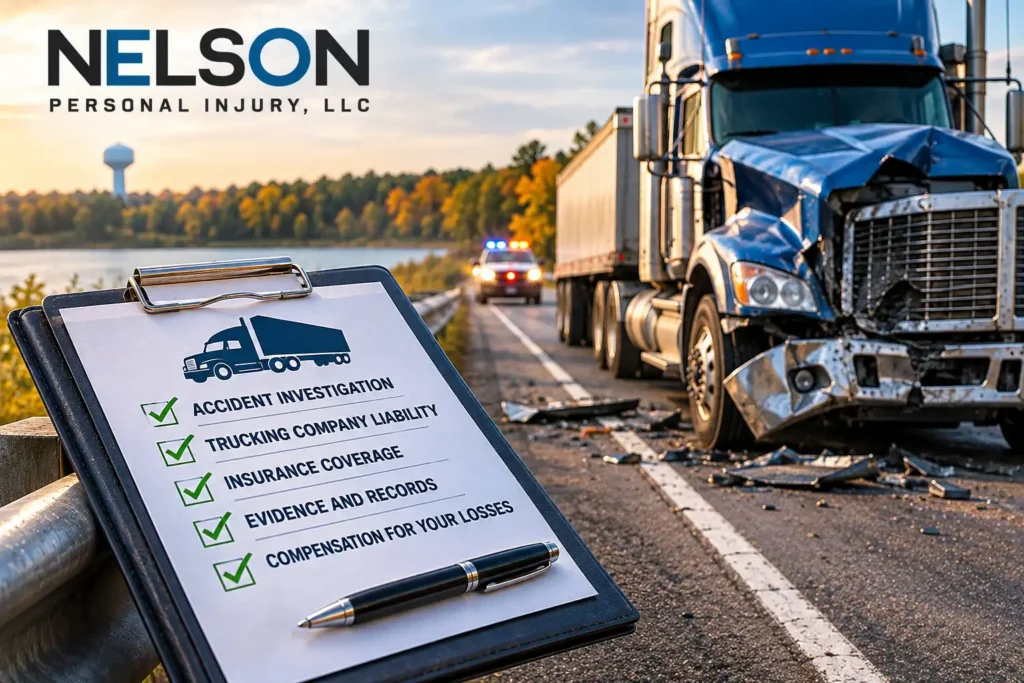

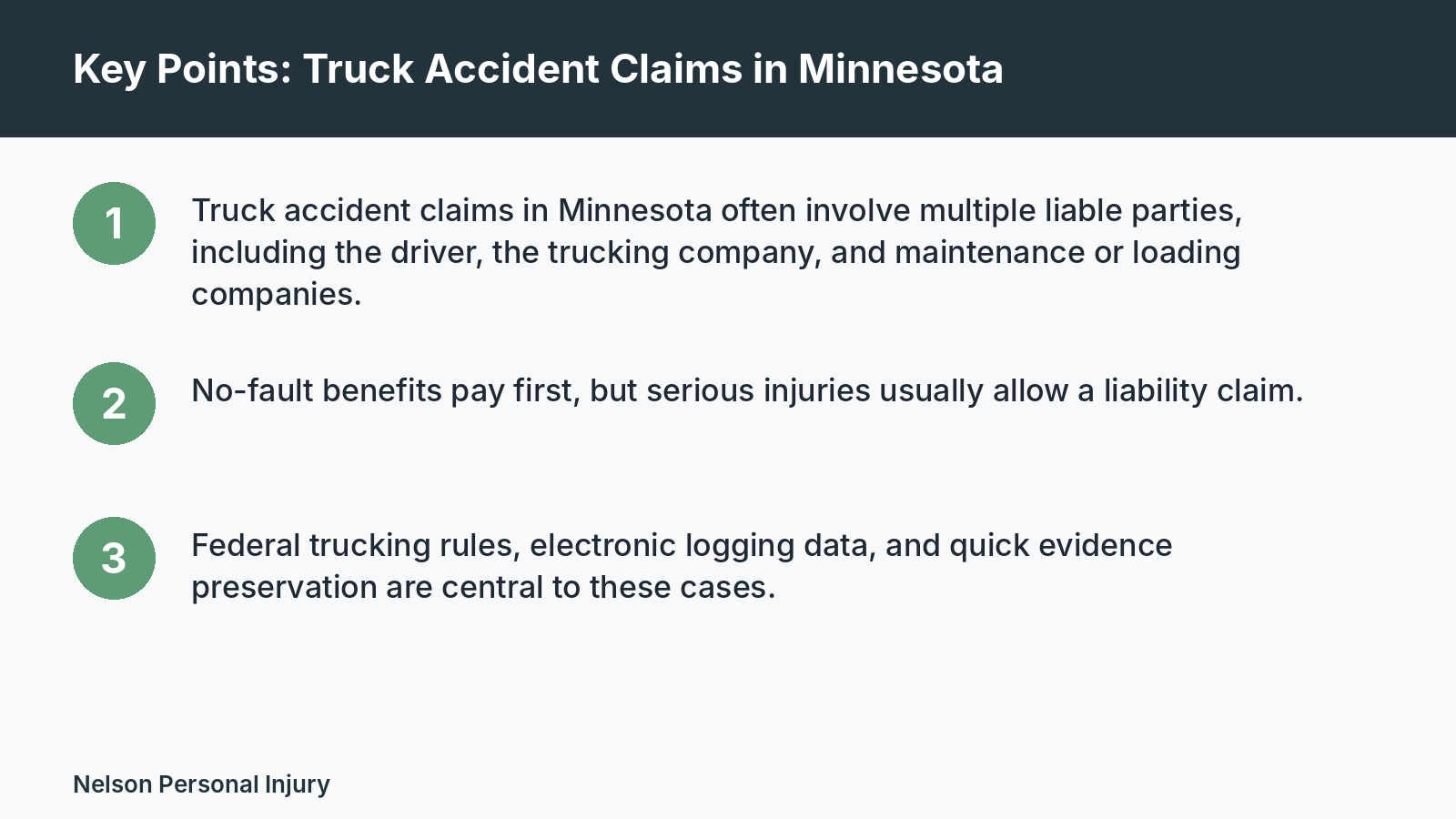
Truck accident claims in Minnesota often involve multiple liable parties, including the driver, the trucking company, and maintenance or loading companies. No-fault benefits pay first, but serious injuries usually allow a liability claim. Federal trucking rules, electronic logging data, and quick evidence preservation are central to these cases.
Reviewed by Matt Nelson at Nelson Personal Injury. Last reviewed November 2026.
Semi-trucks move freight through Minnesota every day on I-94, I-35, I-694, and Highway 10, including corridors near Maple Grove and St. Cloud. Winter weather, long hauls, and heavy loads raise the risk of serious crashes. When a truck hits a passenger vehicle, injuries are often severe, and the claim is more complex than a typical car accident.
Here is what injured Minnesotans should know.
Why Truck Cases Are Different
- Trucks weigh up to 80,000 pounds, causing more severe injuries
- Federal safety regulations apply to interstate carriers
- Multiple companies may share responsibility
- Commercial policies carry higher limits
- Trucking companies often send investigators to the scene quickly
Because so much is at stake, early action matters.
Common Causes of Truck Accidents in Minnesota
Truck crashes usually involve one or more of the same problems:
- Driver fatigue from long hours or pressure to meet delivery windows
- Distraction from phones, dispatch devices, or in-cab screens
- Poor maintenance, such as worn brakes, bad tires, or broken lights
- Speeding or following too closely for the size of the truck
- Improperly loaded or unsecured cargo
- Winter weather combined with driving too fast for conditions
Each cause points to different evidence and sometimes a different responsible party. Fatigue may lead to the carrier’s scheduling records, while brake failure may point to a maintenance company. Identifying the cause early shapes the whole claim.
Who May Be Liable
Depending on the facts, responsible parties may include:
- The truck driver, for speeding, fatigue, distraction, or impairment
- The motor carrier, for negligent hiring, training, or supervision, or pushing unrealistic schedules
- A broker or shipper, in some situations
- A maintenance company, for brake or tire failures
- A cargo loader, for improperly secured or overweight loads
- A parts manufacturer, for defective equipment
Federal Trucking Rules
The Federal Motor Carrier Safety Administration sets rules on hours of service, driver qualifications, drug and alcohol testing, vehicle maintenance, and cargo securement. Violations of these rules can be strong evidence of negligence. Electronic logging devices record driving hours and can show whether a driver exceeded limits.
No-Fault and the Liability Threshold
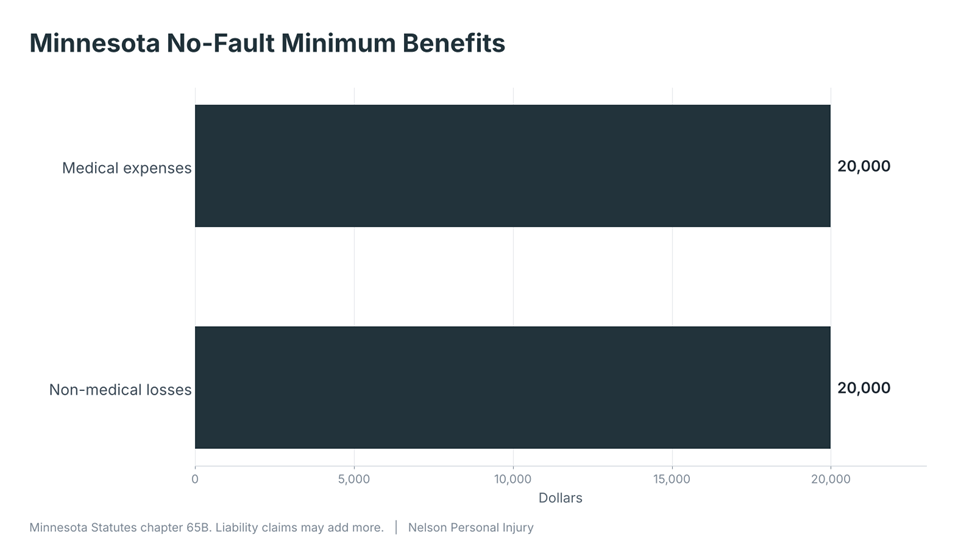
Minnesota no-fault benefits provide at least $20,000 for medical expenses and $20,000 for non-medical losses after a crash. To pursue a liability claim for pain and suffering, you generally must meet a threshold, such as more than $4,000 in medical expenses, 60 days of disability, permanent injury, permanent disfigurement, or death. Most serious truck crashes meet this threshold.
Comparative Fault in Minnesota
Minnesota follows modified comparative fault. You can recover as long as your fault is not greater than the fault of the party you are claiming against, and your damages are reduced by your percentage of fault. Trucking insurers often argue the passenger vehicle driver was partly to blame, especially in winter conditions.
Evidence to Preserve
- Electronic logging device data
- Engine control module data showing speed and braking
- Driver qualification and training files
- Maintenance and inspection records
- Dash camera footage
- Dispatch communications
- Drug and alcohol test results
A preservation letter should be sent quickly, because some records may be discarded under federal retention rules.
Our Minnesota car accident attorney page explains more about how crash claims are evaluated.
Damages in Truck Accident Cases
Injured people may recover medical expenses, lost wages, loss of earning capacity, future care, and pain and suffering. Families may bring wrongful death claims. Commercial insurance policies for interstate carriers often carry minimum liability limits of $750,000 or more, which can make full compensation possible.
Winter Truck Crashes
Minnesota winters bring black ice, whiteouts, and jackknifed trailers. Truck drivers must slow down and adjust for conditions, and federal rules require extreme caution in hazardous conditions, including stopping when driving becomes unsafe. Weather does not excuse a trucker who was driving too fast or following too closely.
In practice, that means slowing well below the posted limit on icy roads, leaving far more following distance than in dry weather, and avoiding sudden braking or lane changes. Drivers should inspect brakes, tires, and lights before winter trips and use traction devices where conditions call for them. Federal rules require drivers to reduce speed in hazardous conditions and to stop driving when conditions become too dangerous. A carrier that pushes a driver to keep going through a storm may share responsibility for a crash.
Deadlines
Minnesota generally allows six years to bring a negligence claim, and three years for wrongful death. Claims involving government vehicles have shorter notice requirements. Waiting can mean losing critical trucking records.
What to Do After a Truck Crash
- Call 911 and get medical care.
- Photograph the truck, trailer, company name, and DOT number.
- Collect witness information.
- Avoid giving statements to the trucking company’s insurer.
- Contact a truck accident lawyer quickly.
Learn more about our Minnesota personal injury attorney services.
Frequently Asked Questions
Who is liable for a truck accident in Minnesota?
Possibly the driver, trucking company, loader, maintenance company, or others.
How long do I have to file a truck accident claim in Minnesota?
Generally six years for negligence and three years for wrongful death.
Does no-fault cover truck accident injuries?
Yes. No-fault benefits pay first, and serious injuries may allow a liability claim.
What evidence is important in a truck crash case?
Logging device data, maintenance records, driver files, and dash camera footage.
How much insurance do trucking companies carry?
Interstate carriers often must carry at least $750,000 in liability coverage, and many carry more.
Can I recover if I was partly at fault?
Yes, if your fault is not greater than the defendant’s, but your damages are reduced.
What should I do right after a truck accident in Minnesota?
Move to safety if you can, call 911, get medical care, photograph the truck and its DOT number, collect witness information, and talk to a truck accident lawyer before giving statements to the trucking company’s insurer.
Talk to a Minnesota Truck Accident Lawyer
Nelson Personal Injury represents people seriously hurt in truck crashes across Minnesota. When you call, our team will ask about the crash, the truck, and your injuries, then explain how to preserve evidence and pursue every responsible party. Learn more about our Minnesota personal injury attorney services.