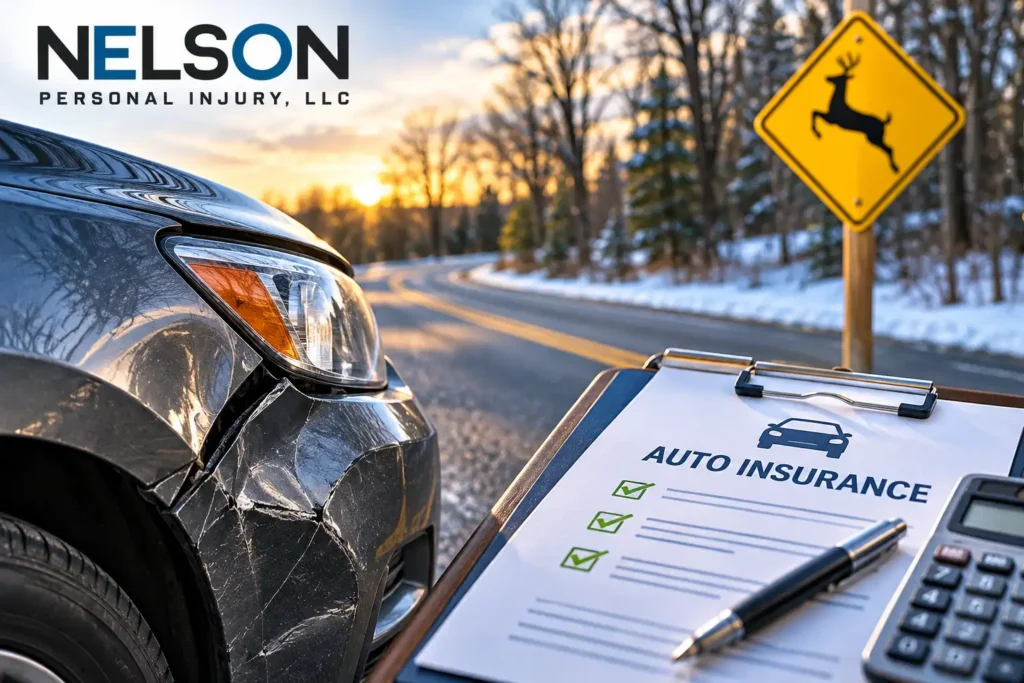
Hitting a deer is usually a comprehensive claim, not an at-fault accident, so it often has little or no effect on your Minnesota insurance rate. Swerving and hitting another car or a ditch can change how the claim is handled. If anyone is hurt, Minnesota no-fault benefits pay medical bills and lost income regardless of fault.
Usually not much, and often not at all. Hitting a deer is typically covered under comprehensive coverage, not collision, because animal strikes are generally treated as events outside the driver’s control rather than at-fault accidents. Minnesota also limits insurer surcharges for accidents where the driver was not at fault. Your rate could still change for other reasons, such as several claims in a short period. If you swerved to avoid the deer and hit another car or went into a ditch, the claim may be handled differently.
November is peak deer season in Minnesota. Mating season and hunting activity push deer across highways and rural roads, especially at dawn and dusk. Thousands of deer-vehicle collisions happen across the state each year, and many cause serious damage and injuries.
How a Deer Collision Is Usually Classified
| Situation | Coverage Usually Involved | Effect on Rates |
|---|---|---|
| Vehicle strikes a deer | Comprehensive | Typically treated as not at fault |
| Driver swerves and hits a tree or ditch | Collision | May be treated as at fault, depending on the insurer and facts |
| Driver swerves into another vehicle | Collision and liability | May be treated as at fault |
| Deer struck by another vehicle and thrown into yours | Comprehensive, possibly another driver’s liability | Usually not at fault |
Safety experts generally advise drivers not to swerve for a deer, because swerving often leads to more dangerous crashes with other vehicles or fixed objects.
What Comprehensive Coverage Pays
Comprehensive coverage pays to repair or replace your vehicle after an animal strike, minus your deductible. It is optional in Minnesota, so drivers who carry only the required coverage may not have it. Lenders usually require comprehensive on financed or leased vehicles.
Injuries From a Deer Collision
If you or a passenger are hurt, Minnesota’s no-fault insurance pays regardless of who caused the crash. Personal injury protection covers medical expenses and certain income loss and replacement services up to the policy limits. Your own no-fault coverage usually applies first. Learn more about Minnesota no-fault insurance and PIP coverage.
When Someone Else May Be Responsible
Most deer collisions involve no one else at fault. But other parties can sometimes share responsibility, such as:
- A driver who was following too closely and rear-ended you after you braked for a deer
- A driver who struck a deer and sent it into your lane
- A driver who swerved into your lane to avoid a deer
In those situations, a claim against the other driver’s liability insurance may be possible if your injuries meet Minnesota’s threshold for a negligence claim. Our guide on proving driver negligence in a Minnesota car accident explains how fault is established.
What to Do After Hitting a Deer
- Move to a safe spot and turn on hazard lights.
- Call 911 if anyone is hurt or the deer is blocking the road.
- Do not approach an injured deer.
- Photograph the vehicle damage, the scene, and any marks on the road.
- Report the crash to your insurer promptly.
- Get medical care, even for symptoms that seem minor.
Minnesota allows a person to claim a deer killed in a collision by obtaining a permit from a law enforcement officer, if they want the animal.
Motorcycles and Deer
Riders face a much greater risk of serious injury in deer collisions. A motorcyclist who strikes a deer or goes down avoiding one can suffer fractures, head injuries, and road rash. Minnesota no-fault rules apply differently to motorcycles, and riders may need to rely on optional coverages they purchased. Reviewing your motorcycle policy before riding season ends in the fall can prevent surprises.
Reducing Your Risk
Slow down in areas with deer crossing signs, use high beams when no other traffic is present, watch the edges of the road, and remember that deer often travel in groups. If one crosses, more may follow.
Should You Report a Deer Collision?
Yes. Report the collision to your insurer promptly, even if the damage looks minor, because hidden damage to sensors, radiators, and frames is common and late reporting can complicate a claim. Most policies require prompt notice of any loss.
Minnesota law also requires a written crash report in some situations, such as crashes that cause injury or significant property damage when police did not investigate. A police report or crash report provides a clear record that the damage came from an animal strike, which helps keep the claim classified as comprehensive.
Frequently Asked Questions
Does hitting a deer count as an at-fault accident in Minnesota?
Generally no. Animal strikes are usually comprehensive claims treated as not at fault.
Will my rates go up after a deer claim?
Usually not significantly, though multiple claims can affect rates.
Does no-fault insurance cover injuries from a deer crash?
Yes. Minnesota no-fault benefits apply regardless of fault.
What if I swerved to miss the deer and crashed?
The claim may fall under collision coverage and could be treated as at fault.
Can I sue anyone after a deer collision?
Only if another driver contributed to the crash and your injuries meet Minnesota’s thresholds.
Do you have to pay a deductible if you hit a deer?
Usually yes. Your comprehensive deductible applies before the insurer pays for vehicle damage.
Should I tell my insurance company I hit a deer?
Yes. Prompt reporting protects your coverage and documents that the damage came from an animal strike.
Talk to a Minnesota Car Accident Lawyer
Nelson Personal Injury helps people across Minnesota who were hurt in crashes, including collisions involving deer and other drivers. When you call, our team will ask how the crash happened, what injuries you have, and which insurers are involved, then explain your options. Learn more about our Minnesota car accident attorney services.